
Do You Need a Building Warrant for a Bathroom in Scotland?
Many people planning a new bathroom in Scotland ask if they need a building warrant. For a plain swap of a suite in a house, often not. For a wet room, a flat or a change to walls and drains, you should check. This guide sets out what the Scottish guidance says, so you know which questions to put to your council.
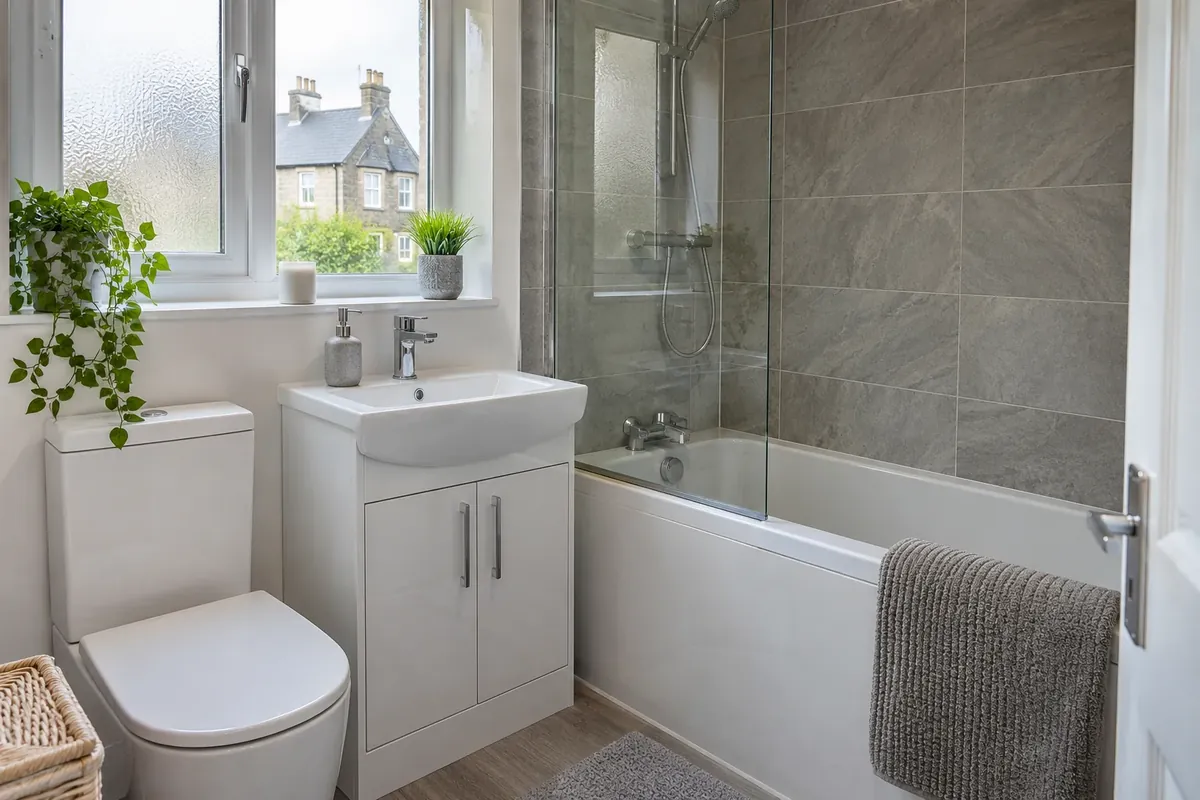
What a building warrant is
A building warrant is permission from your local council, in Scotland, for building work to go ahead. It is separate from planning permission. The aim is to check that the work meets the building regulations, which cover things like drainage, ventilation, structure and safety.
Not all work needs one. The Scottish Government's Building Standards Technical Handbook includes a list of work that does not need a warrant. That list is the place to start, and the section is called Buildings, work, services, fittings and equipment not requiring a warrant.
Work that usually does not need one
For houses, the Technical Handbook for domestic buildings lists some bathroom work as not needing a warrant. That includes adding an en-suite bathroom or shower room, with its drainage, so long as certain conditions are met. It also covers replacing a fitting with another of the same general type, as long as the work is no worse than the standard at present.
Councils say the same thing in plainer words. City of Edinburgh Council's building standards guidance lists the alteration or refit of a bathroom in a house as work that does not need a warrant, with the same conditions about size and storeys.
- The work must not make the house bigger.
- It must not change how waste water leaves the house.
- It must not affect a wall shared with a neighbour.
- It must not create a storey higher than 4.5 metres.
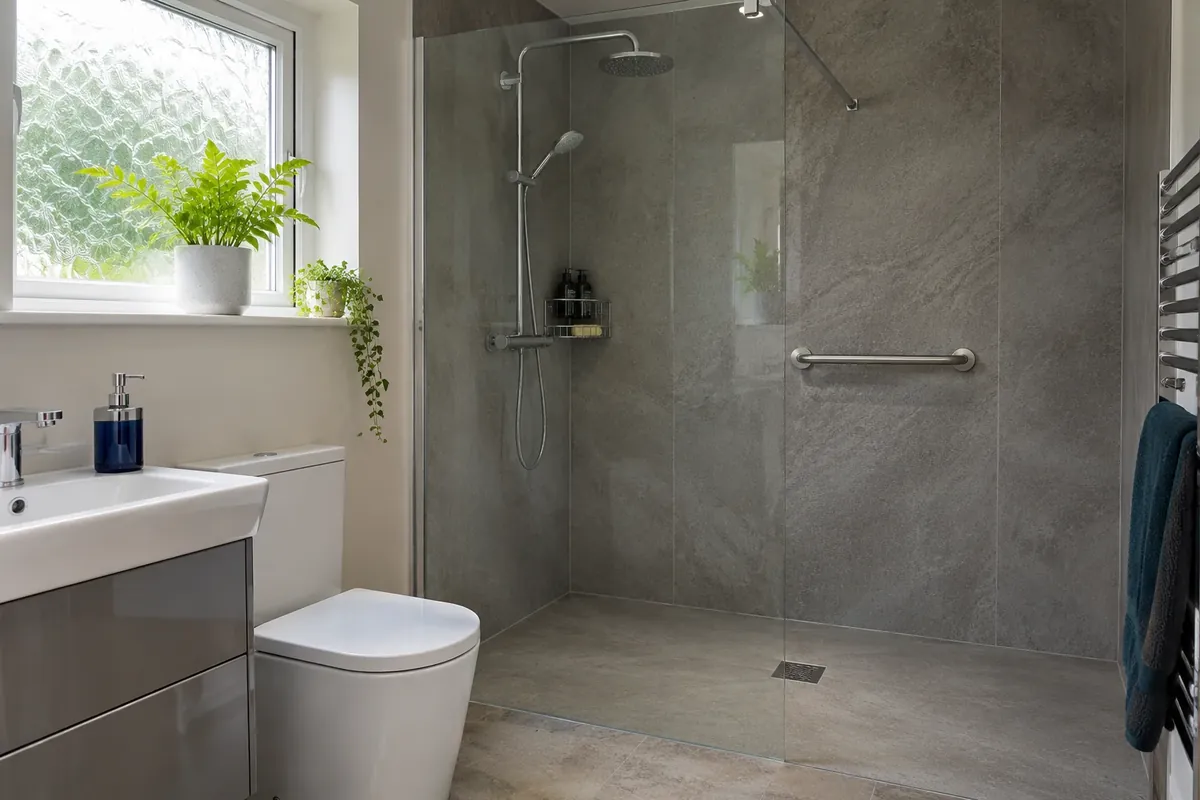
Work that can need a warrant
There are several cases where you should talk to the council before starting. The first is a wet-floor shower room. The handbook says a wet-floor shower room is not counted as an ordinary sanitary fitting for the exemption on single fittings. So if you plan a wet room, check first.
The second is a flat. The exemptions in the handbook are written for houses. A flat or maisonette shares walls, floors and drains with neighbours, and council guidance says to ask them. A tenement bathroom is often fine for a like-for-like swap, but the council makes the call.
The third is any change to drainage, structure or the shape of the building. Moving a toilet to a new wall with a new soil pipe, removing a wall or adding to the house all fall into this group. So does a loft conversion with a new bathroom, which our loft bathrooms page covers.
The rules still apply when no warrant is needed
Work that is exempt from a warrant must still meet the building regulations. Ventilation is the one people forget. The Technical Handbook says a bathroom should have either an extractor fan able to move at least 15 litres a second, or a passive stack system. Our guide to condensation and ventilation goes into this.
Electrics and water safety follow their own rules too. Electrical work in a bathroom has to be safe, and hot water to a shower or bath has to be controlled to avoid scalding. Ask whoever does your work how they meet each of these.
The handbook is revised from time to time, so check the current edition on the gov.scot website before you rely on any figure here.
How to be sure for your own home
Do not rely on a general guide, ours included. The building standards team at your council has the final say. Their pages usually have a short checker for common jobs. You can also phone or email them.
Ask three things. Is my home a house or a flat? Am I moving any pipes or walls? Am I building a wet room? Write down the answer and the date, and keep it with your paperwork. If you are selling later, a buyer's solicitor may ask for it.
If a warrant is needed, allow time for it. Councils set their own timescales and we do not quote one here.
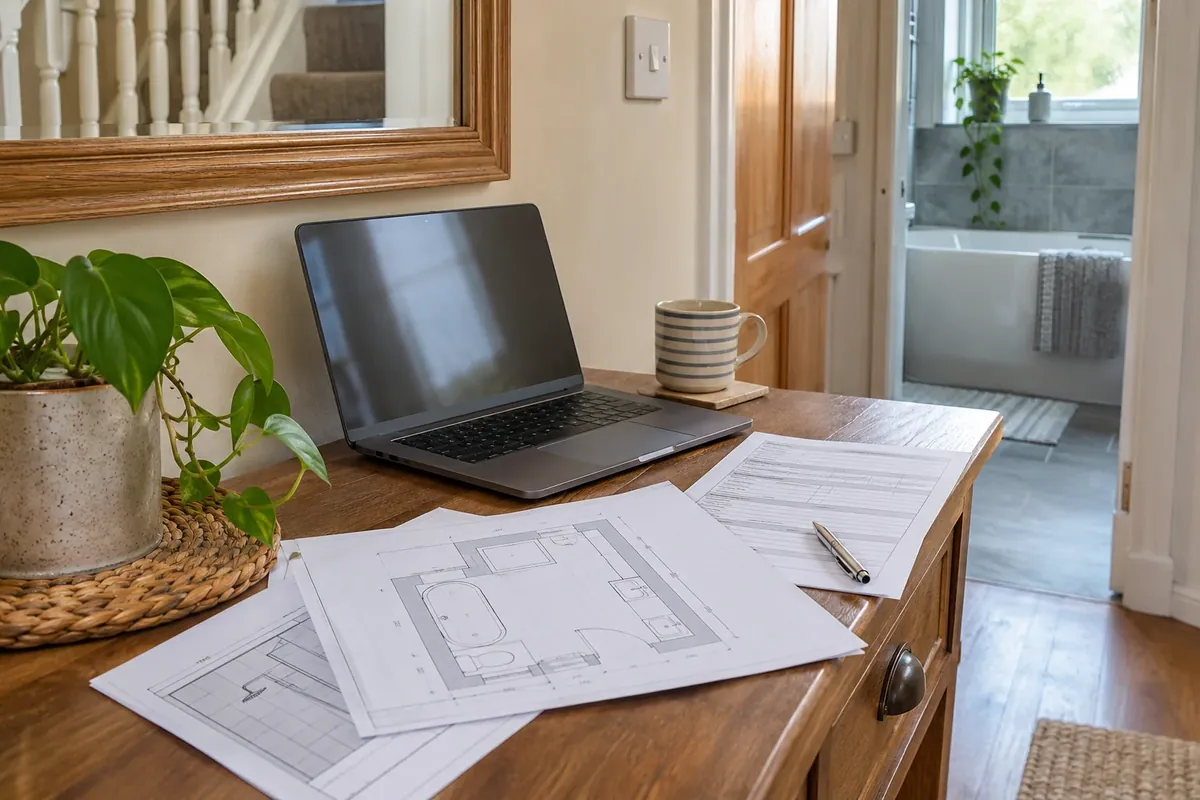
Where our service fits
We plan, supply and install bathrooms, and you can see what that covers on our bathroom installation page. We expect you to check with your council where the points above apply to your home.
If you are in a big city with older flats, such as Edinburgh, Glasgow or Dundee, mention the type of building when you ask for a price. Listed buildings and conservation areas add their own controls, which are separate from building standards.
Common questions
Is a warrant needed to swap a bath for a shower in a Scottish home?
Often not for a house, if the work stays within the exemptions. Flats and wet-floor showers are the cases to check with your council first.
Is a building warrant the same as planning permission?
No. A warrant is about the building regulations. Planning permission deals with how a building looks and is used. You can need one, both or neither.
Who do I ask if I am unsure?
Your local council's building standards team. They decide, and they can say what applies to your address.
Does a listed building change the answer?
It can. Listed building consent is a separate system, so ask your council about both.
Bathroom fitters near you
We fit bathrooms in these towns. Pick yours to see what we do locally.