
Condensation and Ventilation in Scottish Bathrooms
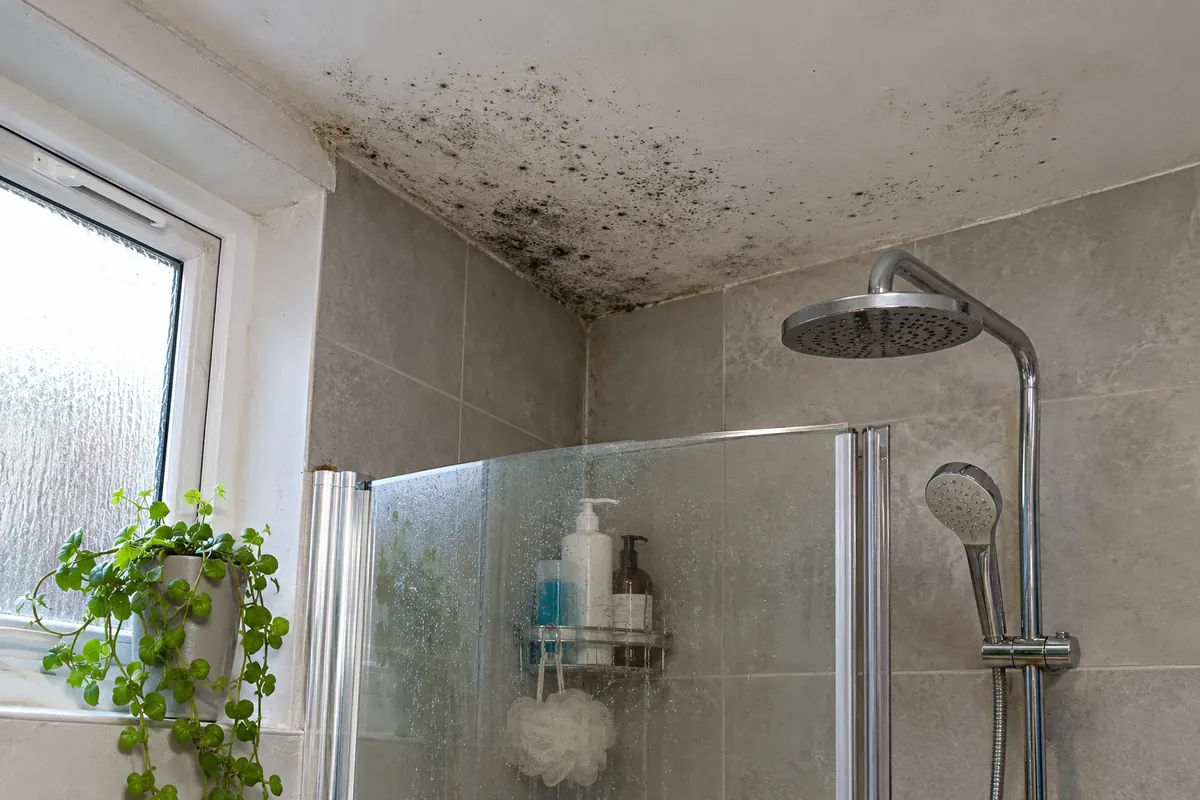
Wet walls, black spots and a mirror that never clears are the signs of a bathroom that is not drying out. Scottish homes make it harder, with thick stone walls and cold winters. The cure is nearly always better ventilation. This guide explains why it happens and what a good fan setup looks like.
Why bathrooms get damp
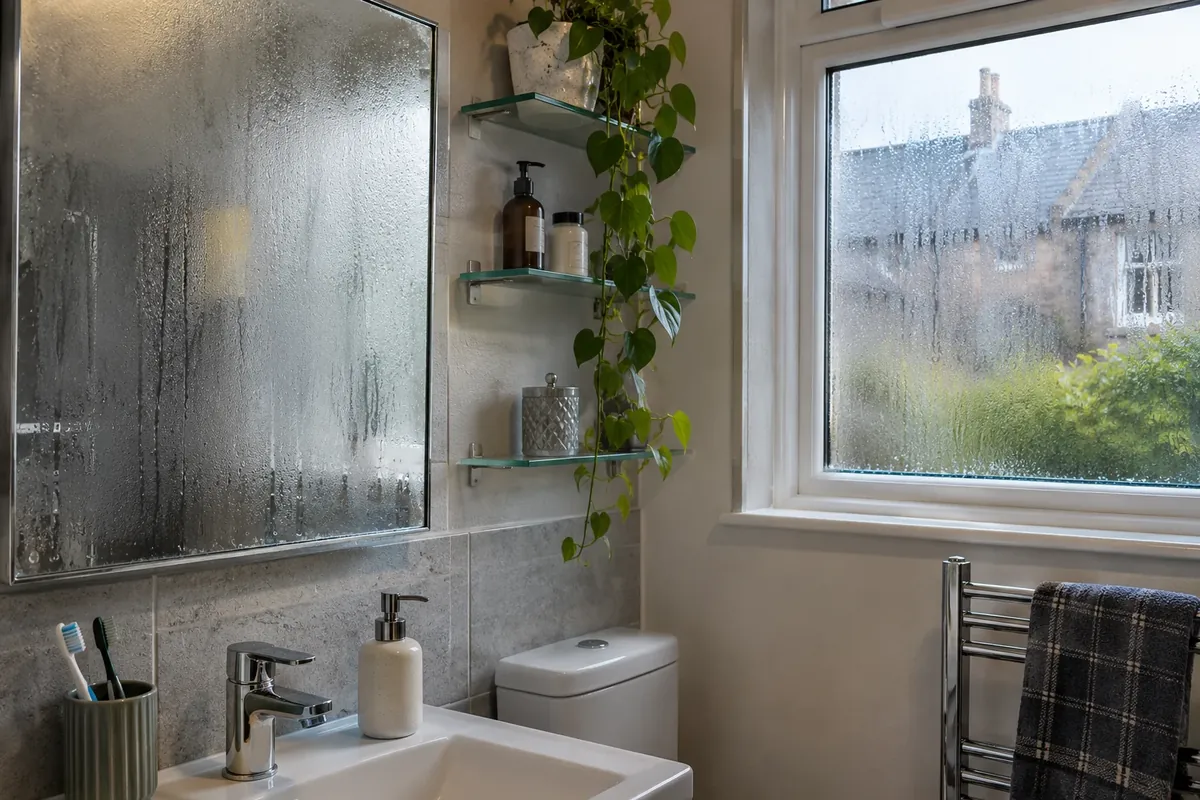
A shower or bath puts a lot of warm, wet air into the room. When that air meets a cold surface, such as an outside wall or a window, the water turns back to liquid. That is condensation.
If the moisture has nowhere to go, it settles on walls and ceilings. Over time it feeds mould, peels paint and can damage plaster. A bathroom with no working fan is the most common cause we hear about.
Why Scottish homes are harder
Thick granite and sandstone walls can stay cold for months. In Aberdeen's granite flats and Glasgow's tenements, a bathroom on an outside wall may have a surface cold enough to collect water every winter. Homes near the water, such as Greenock beside the Clyde, deal with damp air outside as well.
Some tenement and flat bathrooms are internal rooms with no window at all. They rely entirely on a fan. If that fan is weak or blocked, steam hangs about.
What the Scottish standards say
The Scottish Government's Building Standards Technical Handbook for domestic buildings, in the ventilation section, gives a bathroom or shower room two options. One is an extractor fan able to move at least 15 litres a second, running intermittently. The other is a passive stack ventilation system, which uses a duct to a roof terminal and a humidity-sensitive grille. It also covers continuous low-rate fans as an alternative in some homes.
The handbook is revised from time to time, so check the current edition on the gov.scot website for the exact wording. It also has a separate section on condensation.
Our guide to whether you need a building warrant explains that these standards still apply to work that does not need a warrant.
Choosing a fan that works
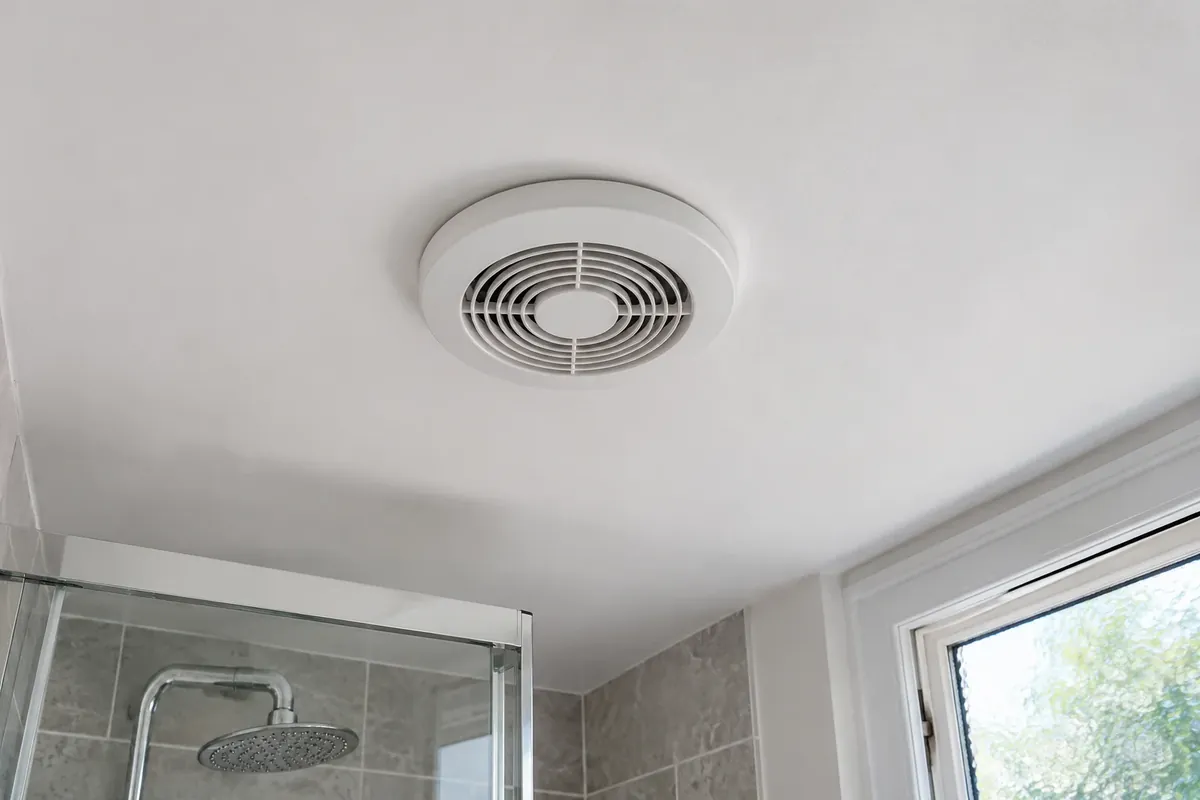
A fan only helps if it moves enough air and sends it outside. A fan that vents into the loft or the wall cavity only moves the damp somewhere else. The duct should run to the outside, with as few bends as possible, and sit at a slight fall so water does not run back.
In a cold loft, a duct can chill and drip water back. Insulating the duct helps. The handbook asks for insulation on passive stack ducts through roof spaces, and the same idea makes sense for any run.
- Quiet running, so people actually switch it on.
- A humidity sensor or a run-on timer, so it keeps going after you leave the room.
- A short, straight duct to an outside wall or roof.
- A gap under the door or a vent, so air can come in to replace what is pulled out.
Everyday habits that help
A good fan does most of the work, but habits matter too. Run the fan during the shower and for a while after. Open the window if there is one. Wipe the walls and screen down with a squeegee or cloth.
Keep the door closed while showering so steam does not spread to cold bedrooms. Dry towels in a heated rail rather than on a radiator in another room.
Surfaces that cope better with damp
Wet-wall panels have few joins, so there is less for moisture to settle in. Mould-resistant paint above the tiles helps too. Our guide to wall panels or tiles explains the pros and cons of each.
No finish makes up for poor ventilation. A bathroom with panels and no fan will still get damp air, and sealant will still blacken.
When to fix it
If you already see mould and peeling paint, deal with the moisture before cleaning it off. A new fan, correctly ducted, is often the start. If the wall itself is wet from a leak, that is a plumbing job, not a ventilation one.
When we plan a bathroom, ventilation is part of the job. See our bathroom installation page for what is included. If you live in Aberdeen, Glasgow or Greenock, tell us whether your bathroom has a window, because it changes what we suggest.
Common questions
How big should a bathroom extractor fan be?
The Scottish handbook gives 15 litres a second as the minimum for intermittent extraction in a bathroom. Check the current edition for the exact wording.
Can I vent a bathroom fan into the loft?
No. The moisture needs to go outside, otherwise it condenses in the loft and can cause damp and rot.
Does a window count as ventilation?
A window helps but is not enough on its own in most bathrooms. A fan works whatever the weather and whether the window is open or not.
Why does my bathroom smell damp even after cleaning?
Usually because moisture stays in the room. A better fan and a run-on timer are the first fix, and a leak should be ruled out.
Bathroom fitters near you
We fit bathrooms in these towns. Pick yours to see what we do locally.