
Wall Panels or Tiles in a Scottish Bathroom?
Wet-wall panels and tiles are the two main ways to finish bathroom walls. Both can look good and both keep water out when fitted properly. They suit different rooms and different households. Here is how they compare on the things that matter day to day, with a few points for older Scottish homes.
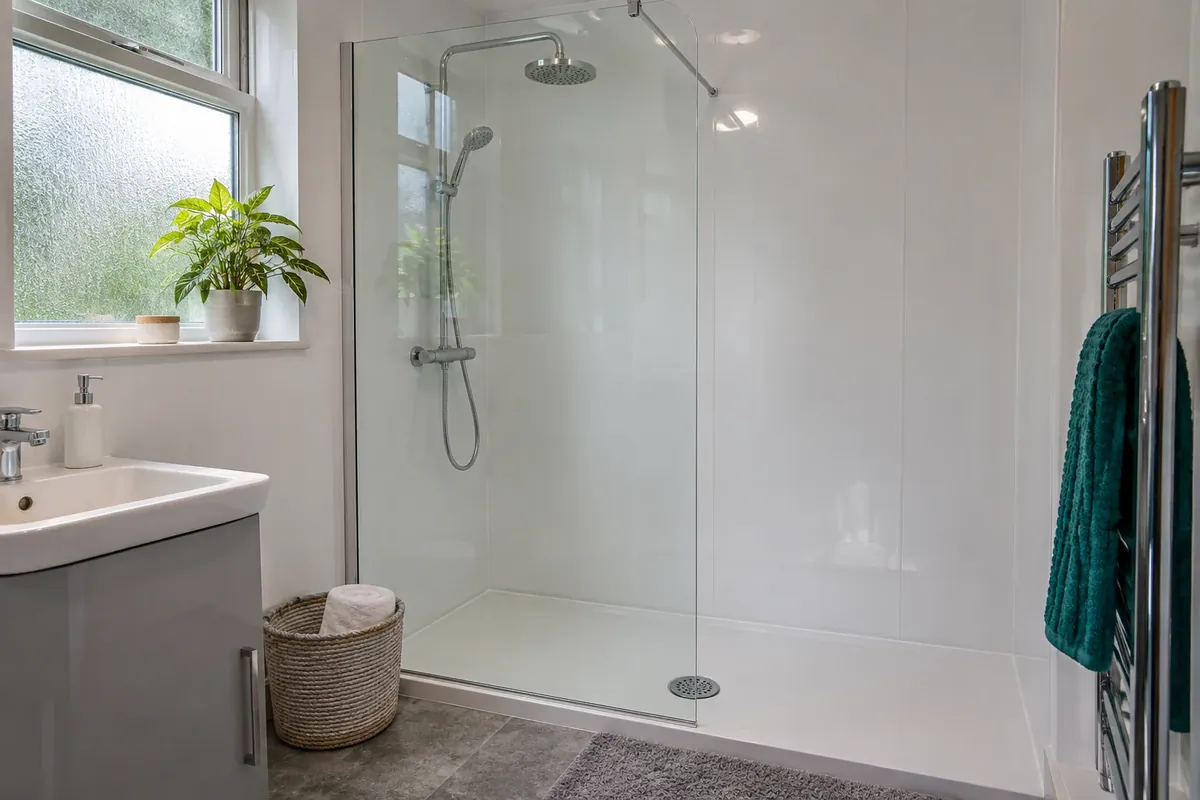
What each one is
Wet-wall panels are large waterproof boards that fix to the wall. A few boards cover a whole shower area, so there are very few joins. The surface is smooth, and many ranges copy tile, stone or plain colours.
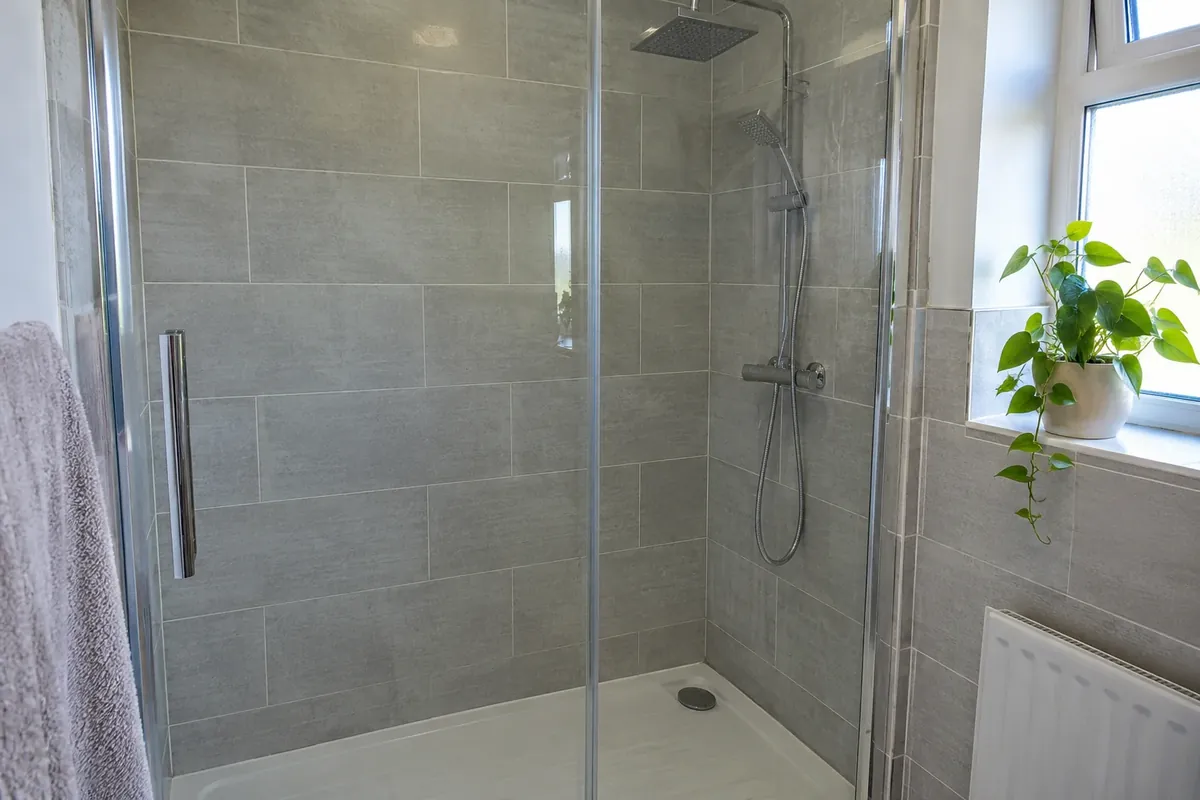
Tiles are individual pieces, ceramic or porcelain, stuck to the wall and sealed with grout. They come in a huge range of sizes and finishes. Every tile has an edge, so there are many more joins to keep clean.
Our wet wall panel bathrooms page shows panels in finished rooms, if you want to see them before you decide.
Which is easier to keep clean
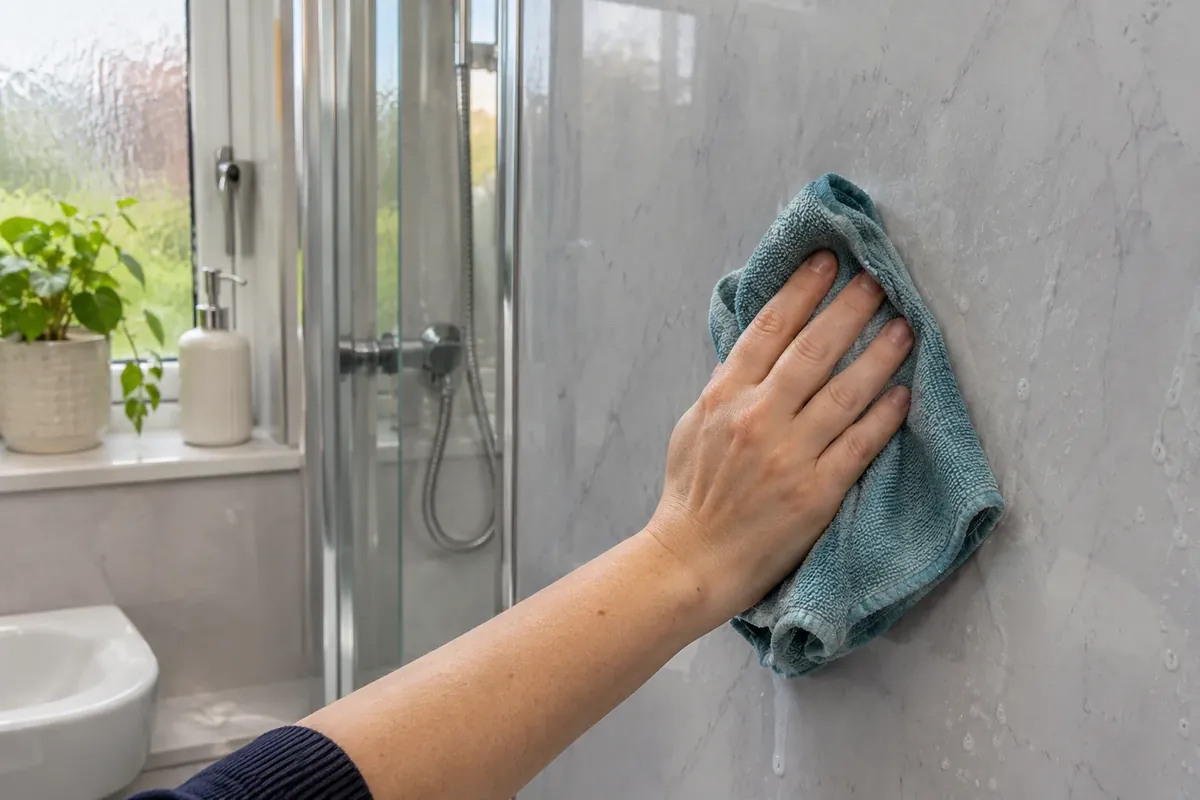
Panels win on cleaning. A wipe with a soft cloth and a mild cleaner usually does it, and there is no grout to trap soap scum and mould. In a busy family bathroom that adds up over a year.
Tiles can look excellent for decades, but grout takes more care. It is porous, so it can stain, and it may need sealing now and then. Larger tiles help, because they mean fewer grout lines.
Damp, cold walls and older Scottish homes
Old stone walls can stay cold, and cold walls collect condensation. In a granite flat in Aberdeen or a sandstone tenement in Glasgow, a bathroom without good ventilation can feel damp whichever finish you pick. Panels do not fix that, though their smooth, sealed surface is easy to wipe down after a shower.
Near the water, such as Greenock with its air off the Clyde, an easy-clean finish and a decent fan help the room stay dry. Whatever you choose, a proper extractor fan that vents outside matters more than the wall finish. Our guide to condensation and ventilation has the detail.
Wall condition matters too. Tiles need a firm, flat surface. Panels can go over old tiles if they are sound and flat, but loose tiles or damp plaster need dealing with first. Whoever fits them should look at the wall before agreeing the job.
Looks and the feel of the room
Tiles give you more choice. You can mix sizes, use a pattern, or run a feature strip. They suit a period house where you want a traditional look, such as white metro tiles with a shower bath.
Panels give a cleaner, more modern look, especially in a plain colour or a stone effect. A large panel behind a walk-in shower looks neat and calm. Some people dislike the look of panels near a window or a mirror because the edge trim shows. A good fitter finishes the corners and trims to keep this tidy.
Cost, speed and repairs
Panels generally go up faster than tiles, because the board is large and there is no waiting for adhesive and grout to cure. That can mean fewer days with the bathroom out of use. We do not quote a timescale here, because it depends on the room.
Tiling usually costs more in labour, and large-format or natural stone tiles cost more again. For a price on your room, see our bathroom installation page. Our bathrooms start from £4,295.
On repairs, a cracked tile is a small job in principle, but matching an old tile can be hard. A damaged panel usually means replacing a whole board. Neither is common when the work is done well.
A mix often works best
You do not have to pick one for the whole room. Many households use panels in the shower, where water is heaviest, and tiles or paint elsewhere. A half-height run of tiles around the basin, with painted walls above, looks smart and costs less than tiling to the ceiling.
If you are not sure, ask for a sample of each and hold them up in your own bathroom light. Look at the joins as well as the colour. If you are in Glasgow and unsure, tell us the age of the building and the state of the walls when you get in touch.
Common questions
Are wet-wall panels waterproof?
Yes, the boards themselves are. The joins and the edges are what need good sealing, so the fitting matters as much as the product.
Can wall panels be fixed over the tiles already there?
Sometimes. The tiles must be flat and firmly fixed, and the wall behind must be dry. Loose or damp walls need attention first.
Do tiles last longer than panels?
Well-fitted tiles can last for many years. Grout and sealant need attention along the way, while panels need much less upkeep.
Which is better for a rented or a family bathroom?
Many people choose panels for the easy cleaning. Tiles are a good choice where you want a particular style.
Bathroom fitters near you
We fit bathrooms in these towns. Pick yours to see what we do locally.