
Accessible Bathrooms and Help With Adaptation Costs in Scotland
A bathroom that is easier and safer to use can help someone stay in their own home. In Scotland there is help with the cost for some people, but it works through your council and has rules. This guide explains what an accessible bathroom can include and how the funding route works. Always check the details with your own council, because they vary.
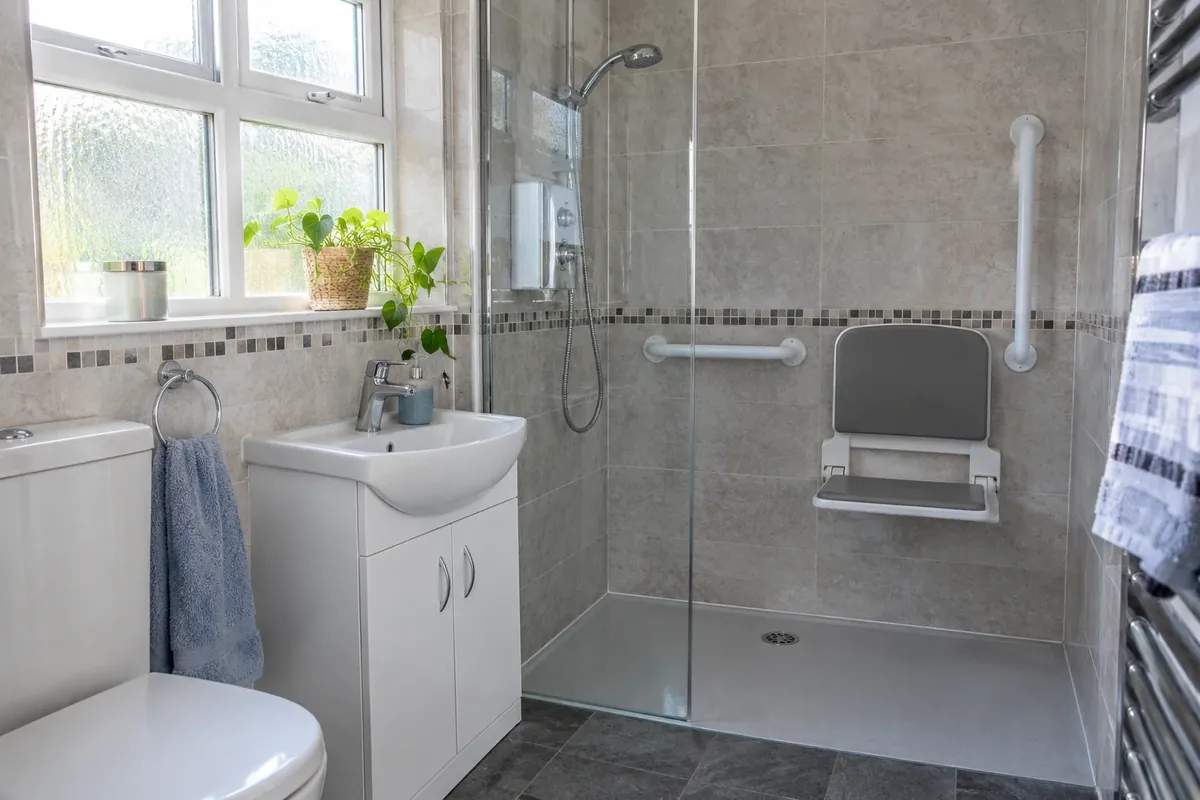
What an accessible bathroom can include
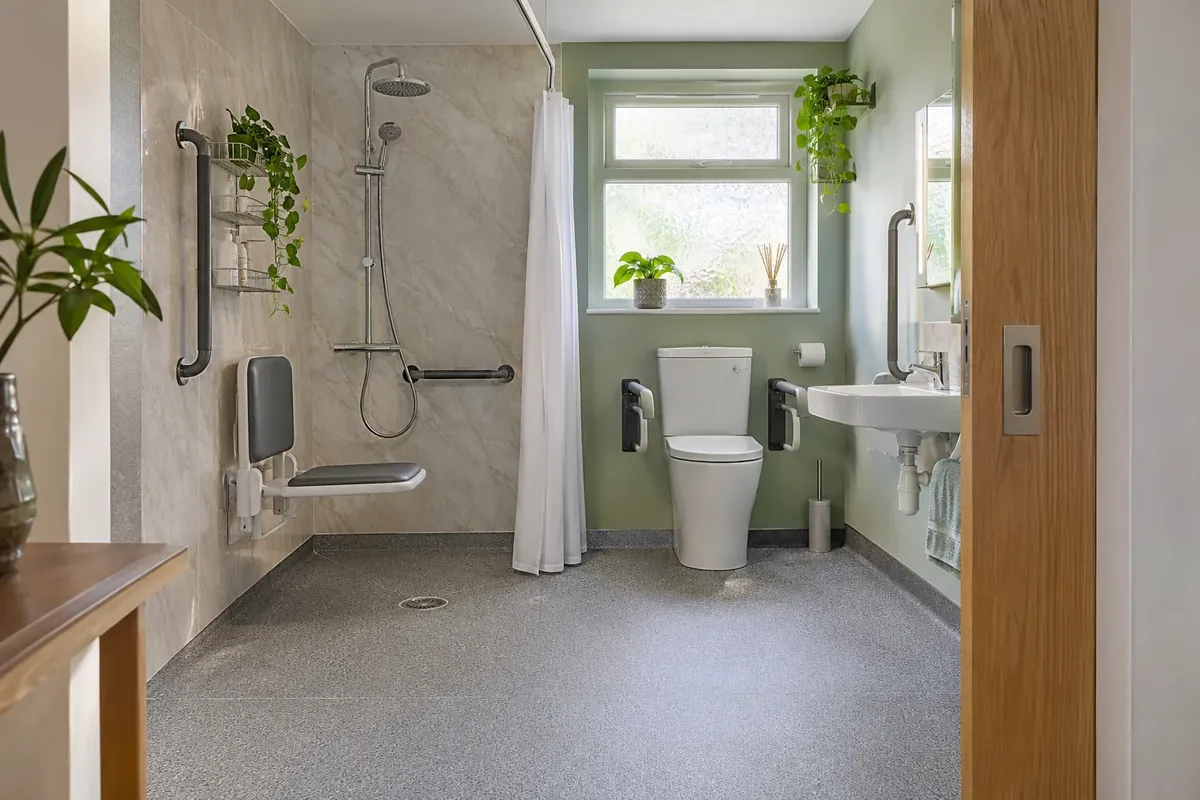
There is no single design. The aim is to remove the things that cause trouble, such as stepping over a high bath edge or reaching across a slippery floor. Our accessible bathrooms page shows what we plan and fit.
- A level-access shower, with a low or flush tray, in place of the bath.
- A seat that folds down, plus grab rails by the shower and the toilet.
- A toilet at a comfortable height, with space beside it.
- A non-slip floor and good, even lighting.
- Doors that open outwards or slide, with enough width to move through.
Where help with the cost comes from
The Scottish Government's guide for homeowners says you may be able to get help if you own your home, you or someone in your household is disabled or has problems getting around, the changes are essential, and you need help paying. The rules vary by council, and renters have different arrangements.
The route starts with your council's social work service. An assessment is usually carried out by an occupational therapist, who looks at your needs and suggests options. The guide says you must have an assessment if you want to apply for financial help.
Your council must give a grant for changes it considers essential. The guide says everyone gets 80 per cent of the cost of work covered by the mandatory grant, and 100 per cent if you receive certain benefits, such as Pension Credit guarantee element. Some councils top up the 80 per cent with extra means-tested help. There is no upper limit, but the council checks that costs are reasonable.
Tenants have a different route
If you rent from your council, the Scottish Government has a separate guide for local authority tenants, and your landlord generally arranges the work. Private tenants and housing association tenants have their own guides too. Always speak to your landlord first and ask what applies.
If you own a flat, check your title deeds. Work in a shared building may involve neighbours, for example where pipes or walls are shared.
Care and Repair
Care and Repair Scotland describes itself as helping older and disabled homeowners repair, improve or adapt their homes so they can stay safely and comfortably. It offers personal, financial and technical advice and support, and says services run in 28 council areas.
Ask your council or Care and Repair Scotland, on careandrepairscotland.co.uk, how the local service works in your area. In Renfrewshire, for example, the council's leaflet says Care and Repair obtains quotations on your behalf. What is offered depends on where you live.
Do not start work too early
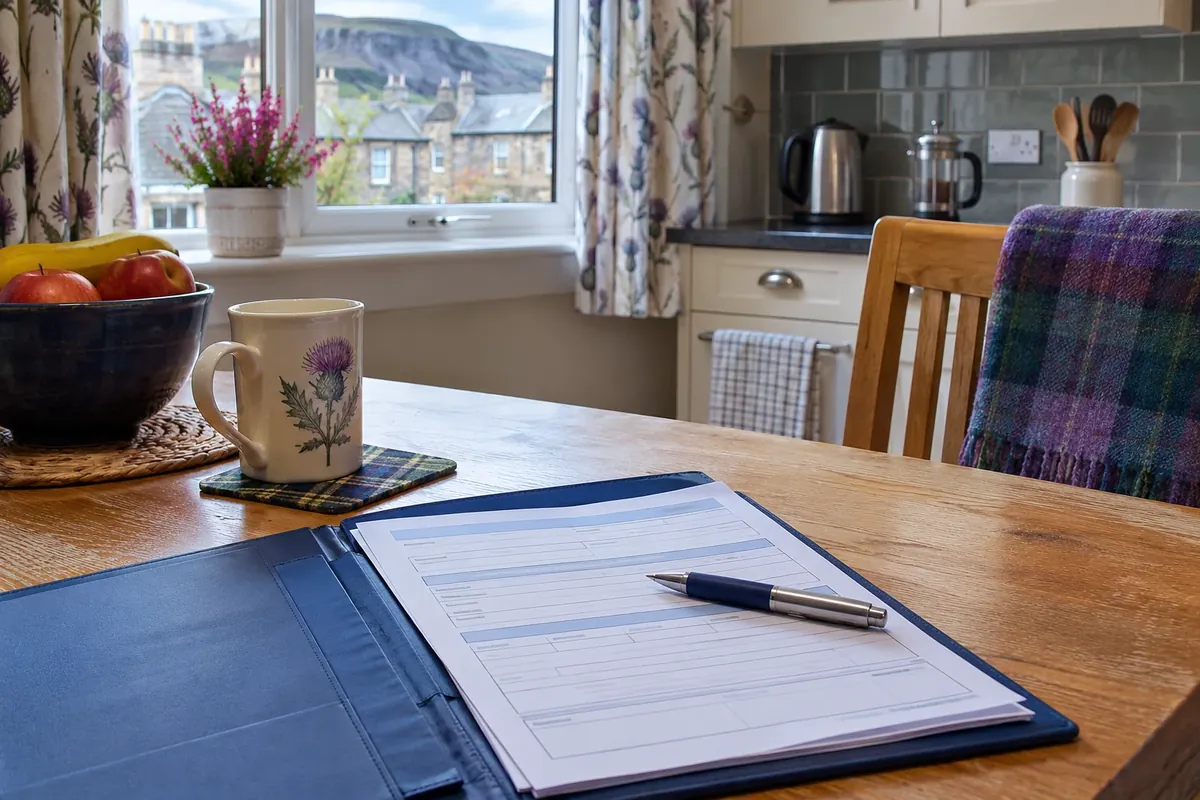
Several councils say clearly that a grant will not be approved for work that has already been carried out. For example, Renfrewshire Council's leaflet on private housing adaptations says this. The Scottish Government guide tells you to speak to your council before beginning any work.
So get the assessment first, and wait for the council's decision before you book a fitter. Ask what the council expects in the way of quotes, because some ask for more than one. Keep copies of everything.
Planning the room itself
The occupational therapist's recommendation is the starting point for the design. It may say a level-access shower with a seat, rails and a raised toilet. A fitter works from that, and the layout is then planned around the room.
A swap from bath to shower is one of the most common changes. Our guide to the checks before a bath-to-shower swap covers this. Ask your council whether any building warrant is needed, and see our guide on building warrants in Scotland.
Private work when you do not qualify
Some people do not qualify for a grant or prefer to go ahead sooner. Our bathrooms start from £4,295, and accessible features can be part of the plan. Our bathroom installation page explains the service.
Older flats and houses in cities like Glasgow, Edinburgh and Aberdeen often need a layout change to give wheelchair or walker access. Tell us about stairs, door widths and who will use the room when you get in touch.
Common questions
Who assesses what adaptations I need?
Usually an occupational therapist, arranged through your council's social work service.
How much of the cost does the council pay?
The Scottish Government guide says 80 per cent for mandatory-grant work, or 100 per cent if you receive certain benefits. Some councils top up. Check with your own council.
Can I start the work before I apply?
No. Councils such as Renfrewshire say they will not approve a grant for work already done, so wait for a decision.
Is Care and Repair free?
It depends on the local service and the help you need. Ask them what is charged and what is covered.
Bathroom fitters near you
We fit bathrooms in these towns. Pick yours to see what we do locally.